
High above the mud, wire, and shattered earth of the Western Front, tethered observation balloons swayed in the wind. To soldiers below, these elongated hydrogen-filled shapes—often likened to sausages—were a constant presence in the sky. They were not curiosities or relics of an earlier age. During World War I, observation balloons represented the apex of military ballooning: mature, systematized, and indispensable to modern industrial warfare.
By 1914, every major army fighting in Europe deployed observation balloons. From the trench-bound stalemate of France and Flanders to the rugged Italian front, balloons became fixtures of the battlefield. They directed artillery, monitored troop movements, and provided commanders with a persistent aerial vantage point unmatched by any other technology of the era. Even as airplanes emerged as symbols of modern air power, balloons quietly remained among the most effective intelligence platforms of the war.
Eyes in the Sky
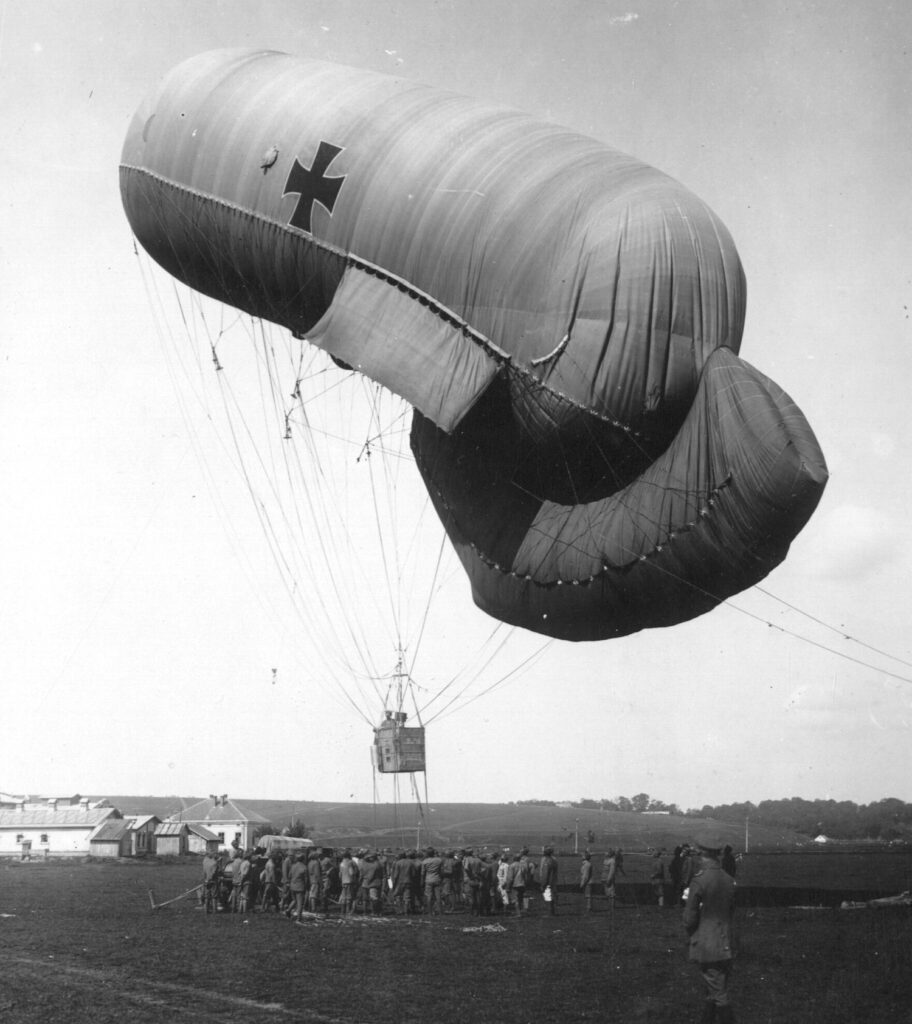
The spherical balloons of the nineteenth century proved ill-suited for the turbulent air over active battlefields. In their place emerged the kite balloon: elongated, aerodynamic, and designed for stability in wind. Germany led the way with the Parseval–Sigsfeld Drachen (“dragon”) balloon, a sausage-shaped design equipped with tail stabilizers that allowed it to remain steady while tethered hundreds or even thousands of feet above the ground.
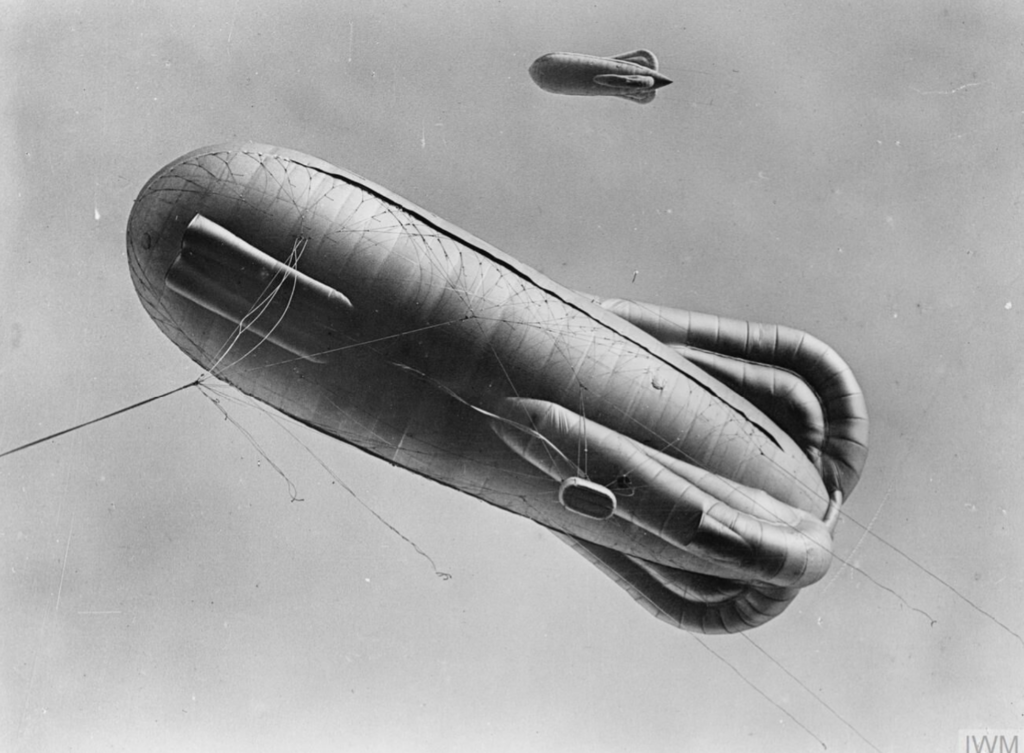
The Allies quickly followed. In 1916, the French introduced the Caquot balloon, whose three large tail fins dramatically improved stability in high winds. The Caquot design proved so successful that it was adopted widely by British and American forces. With improved stability came higher operating altitudes and longer observation periods—critical advantages in a war defined by artillery and attrition.
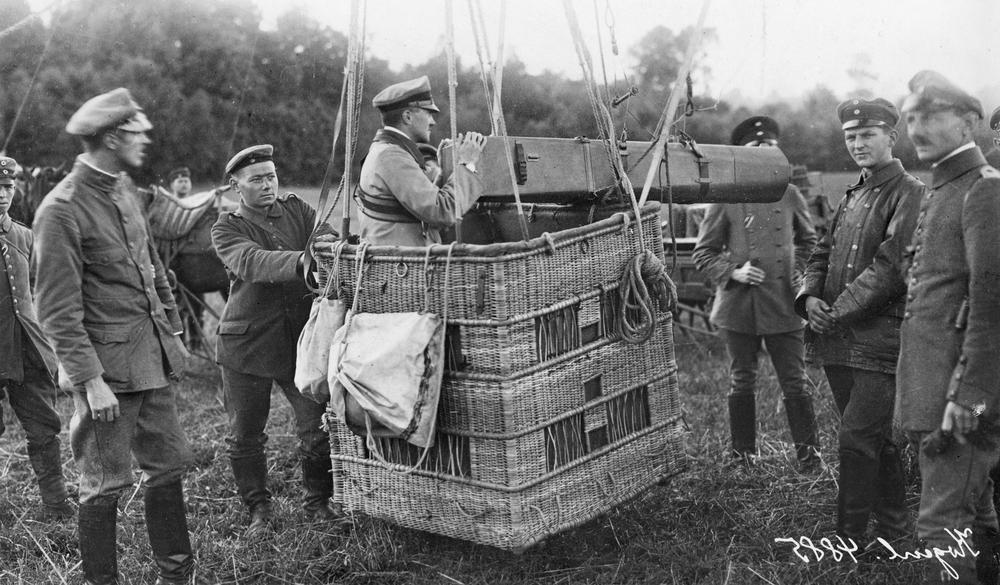
A typical balloon routine began at dawn. Crews inflated the balloon with hydrogen, observers ascended in wicker baskets, and the balloon remained aloft for hours at a time. In the trenches, the phrase “the balloon’s going up” became shorthand for impending action, often signaling the opening of a major offensive.
Communication Is Key
Unlike airplanes, balloons offered a decisive advantage: continuous communication with the ground. A steel tether connected the balloon to a powered winch truck, and telephone wires ran alongside the cable. From their elevated perch, observers scanned enemy positions with binoculars and relayed real-time information directly to artillery batteries.
This immediacy mattered. While airplane pilots could drop messages or return with photographs to be developed later, balloon observers could observe continuously—adjusting artillery fire shot by shot, tracking troop movements, and detecting preparations for attacks well before they became visible from the ground. In the static environment of trench warfare, this persistence made balloons among the most valuable reconnaissance assets on the battlefield.
The Balloon Busters
The effectiveness of observation balloons made them prime targets. To counter their advantage, all sides developed specialized tactics and aircraft for destroying them. The hydrogen that kept balloons aloft also made them spectacularly vulnerable; a single incendiary round could turn a balloon into a towering fireball.
These missions were among the most dangerous in the war. Balloons were heavily defended by anti-aircraft guns and fighter patrols, forcing attacking pilots to dive through intense fire. A distinct class of aviators—known as “balloon busters”—emerged, specializing in these perilous assaults.
Among the most famous was Lieutenant Frank Luke Jr. of the U.S. Army Air Service. In just seventeen days during September 1918, Luke destroyed fourteen German observation balloons and four enemy aircraft. Flying aggressive solo missions at dawn or dusk, when balloons were silhouetted against the sky, he earned a fearsome reputation. Luke’s final mission ended behind enemy lines after he was wounded and forced to land; he reportedly died in a gunfight with German soldiers. His brief career underscored both the importance and the vulnerability of balloon reconnaissance in the final year of the war.
Photographing the Front
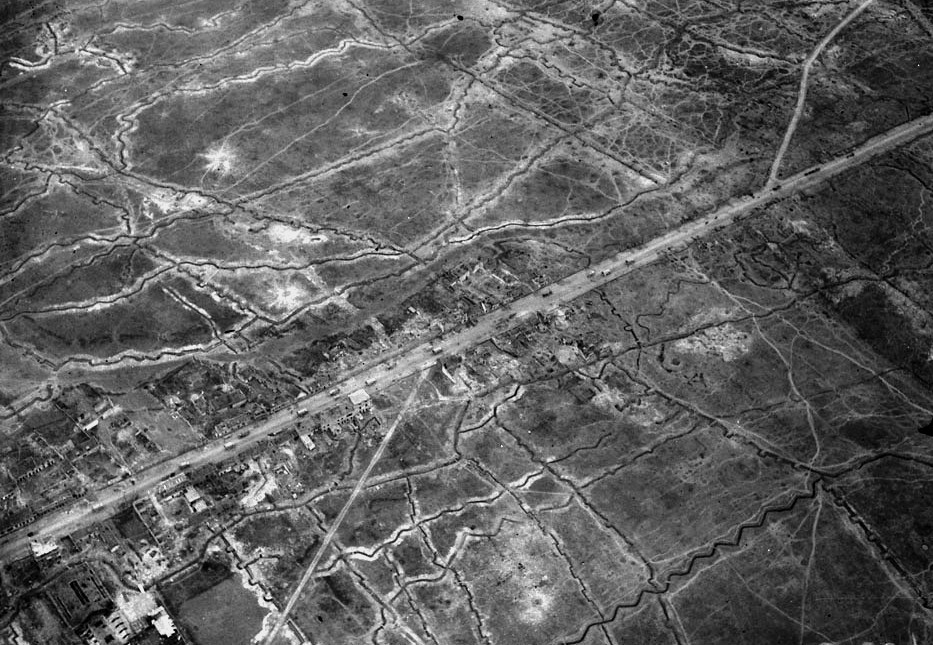
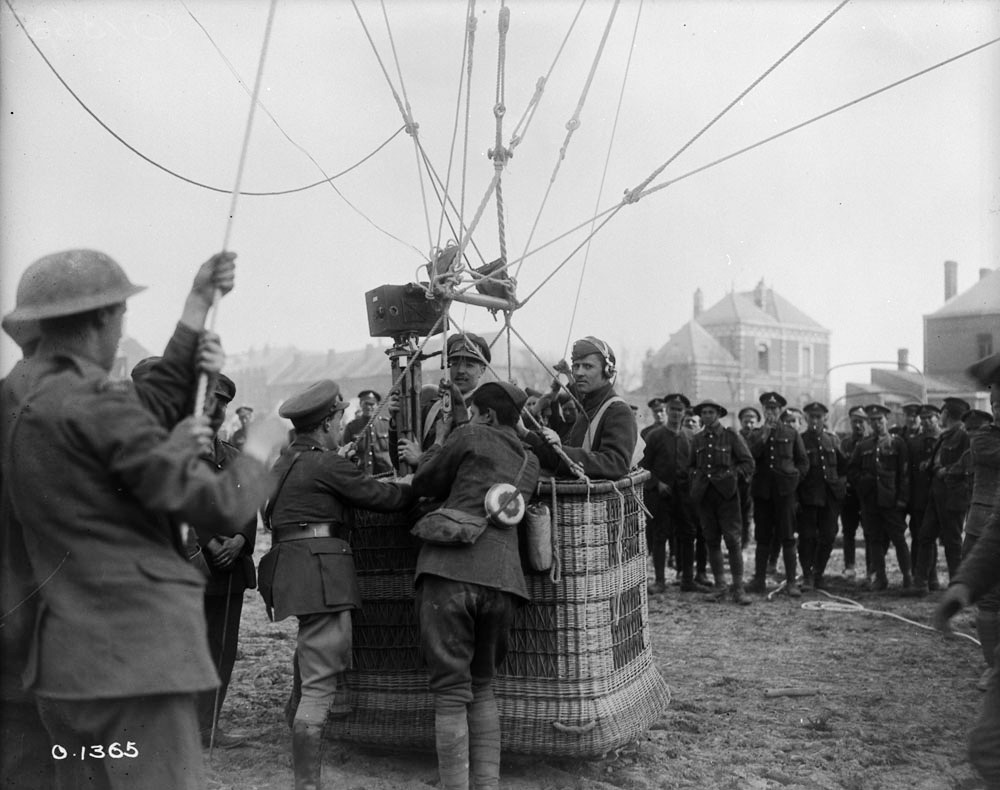
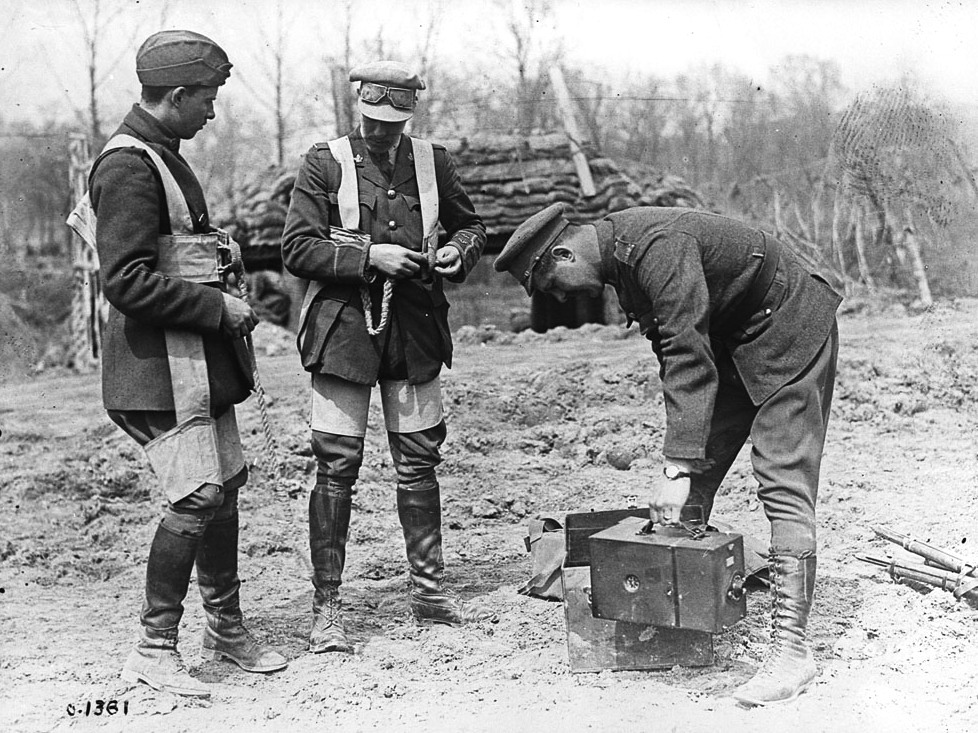
World War I coincided with major advances in photographic technology, and balloons played a significant role in the evolution of aerial photography. Observers carried cameras aloft to document trench systems, artillery positions, and road networks. Unlike airplanes, which passed quickly over targets, balloons could remain stationary over a sector and take multiple images from consistent angles. These were ideal conditions for mapping and stereoscopic analysis.
These photographs were rarely pristine. Images were often oblique, unevenly exposed, and difficult to interpret without context. Yet when compared against maps, sketches, and ground reports, they became powerful analytical tools. Analysts could identify new trenches under construction, assess the effects of bombardments, and track gradual changes in enemy defenses over time.
In this sense, balloons bridged observation and documentation. They transformed the battlefield into a record—one that could be revisited, compared, and studied in ways impossible in earlier wars.
The Last Battlefront for Balloons
By the war’s end, observation balloons were still widely deployed, but their dominance was waning. Fixed-wing aircraft had matured rapidly, offering greater range, flexibility, and survivability. Airplanes could penetrate deeper into enemy territory and increasingly assumed responsibility for reconnaissance, photography, and combat.
Balloons were gradually relegated to static defense zones and artillery spotting roles. After World War I, their use in frontline reconnaissance largely ceased. They would reappear briefly in World War II as barrage balloons defending cities and harbors, and in Japan’s short-lived balloon bomb campaign. But their era as battlefield eyes was over.
From War to Wonder
The end of the war closed the final chapter on balloons as instruments of combat, but not on ballooning itself. In the decades that followed, balloons were reborn as vehicles of leisure, science, and spectacle. Festivals from Albuquerque to Cappadocia filled the skies with color, replacing artillery fire with quiet wonder.
From the observation posts of the American Civil War to the trench-bound fronts of Europe, balloons had offered armies their first sustained aerial perspective. World War I marked both their highest achievement and their farewell. Drifting above the trenches, tethered to the earth below, observation balloons stood at the threshold between centuries—icons of a fading past as modern air warfare surged ahead.