
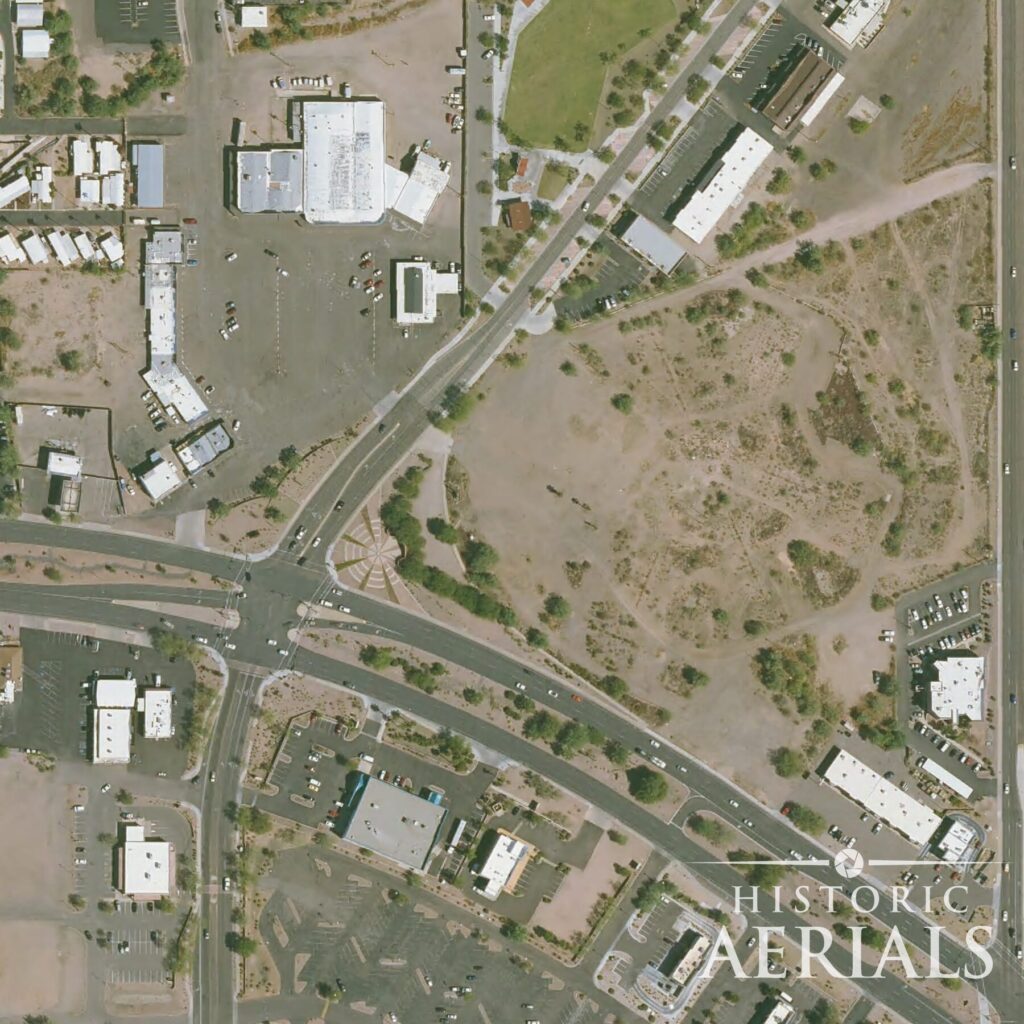
From above, the empty parcel barely explains itself.
There is cracked pavement, scattered desert growth, and a few strange shapes still pressed into the ground. One of them looks like the faint outline of a swimming pool. Another suggests the footprint of a building too deliberate to be accidental.
Historic aerial imagery gives the first real answer.
In 1961, this same parcel was not empty at all. It held a large, wagon-wheel-shaped hotel complex at the edge of Apache Junction, beneath the Superstition Mountains.
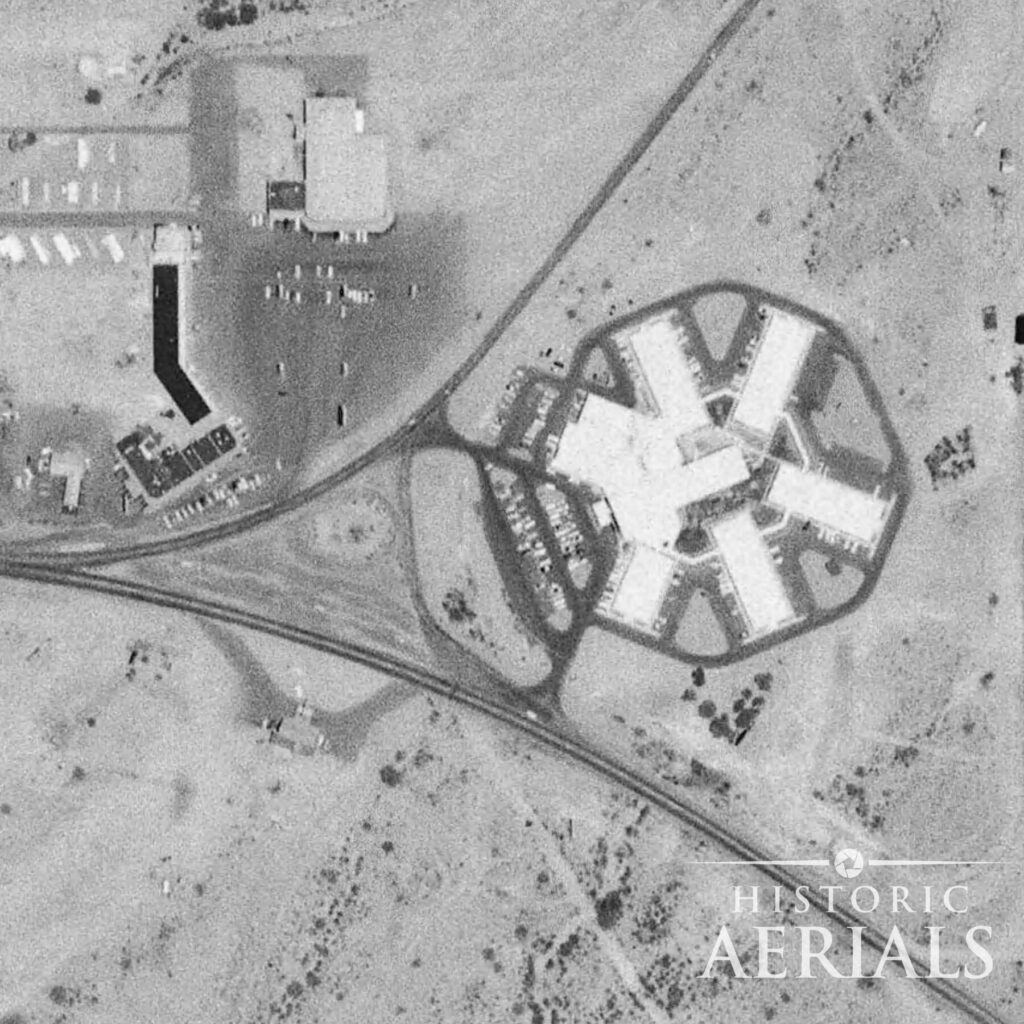
This was the Superstition Ho Hotel, and for a brief moment, it stood at the center of one of Arizona’s most ambitious midcentury development dreams.
A desert crossroads becomes a destination
Long before Apache Junction became a city, this area was a crossroads. The historic Apache Trail met the Old West Highway here, drawing travelers east from Phoenix toward the Superstition Mountains, Roosevelt Dam, and the desert beyond.
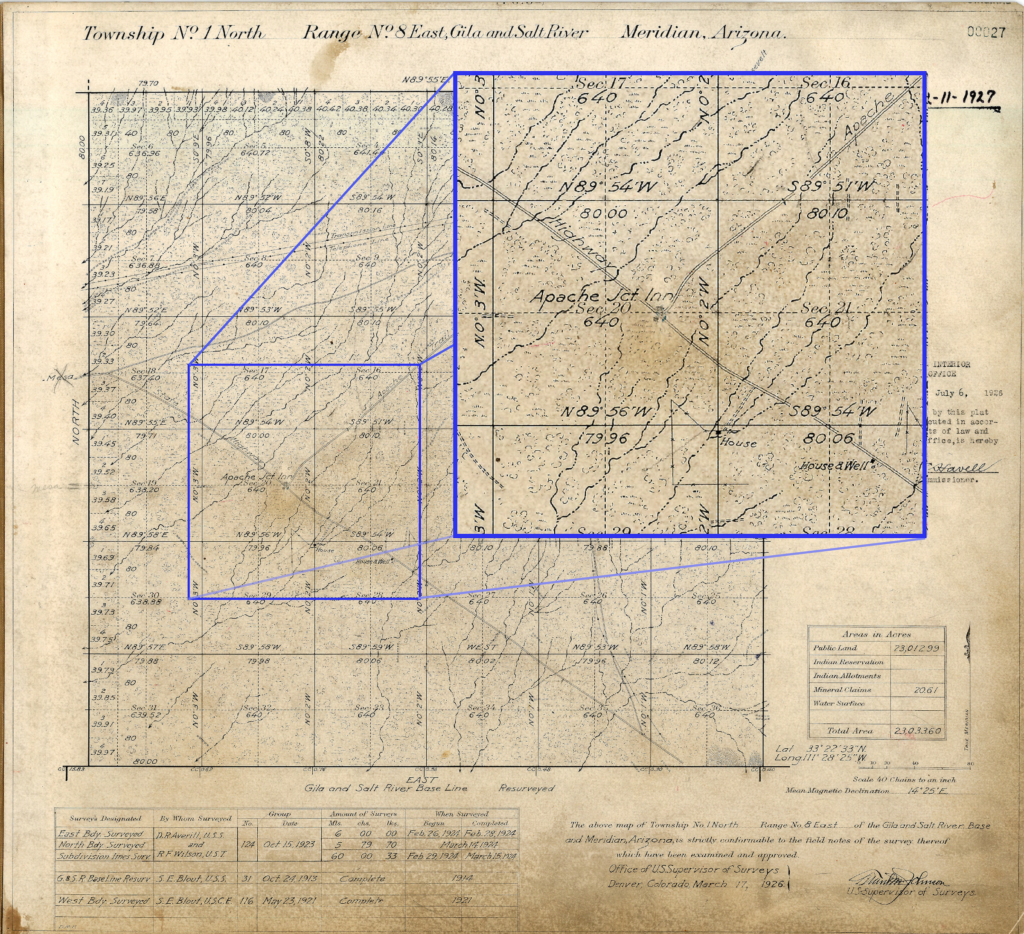
By the late 1950s, developers saw more than a junction. They saw a possible destination.
The Arizona desert still carried enormous cultural appeal. Americans were captivated by Westerns, desert scenery, dude-ranch imagery, and frontier mythology. Apache Junction had all of that ready-made: mountains, legends, open land, and the shadow of the Lost Dutchman mine.
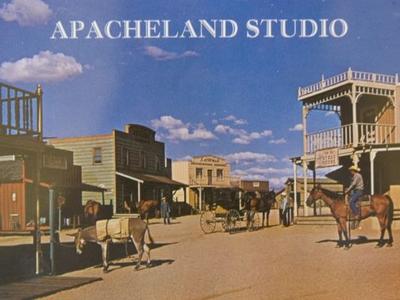
William W. Creighton and other developers tried to turn those raw ingredients into a tourism ecosystem. Apacheland Studios was built nearby as a Western movie production site. The Houston Colt .45s were brought in for spring training before the team became the Astros. At the center of this effort stood a resort hotel designed to give Apache Junction a civic and commercial anchor.
The “Ho Hotel” comes to Apache Junction
The name Superstition Ho was no accident. Phoenix had the Westward Ho, one of the city’s best-known hotels. Scottsdale had the Valley Ho, a symbol of midcentury resort glamour. The Superstition Ho borrowed that naming tradition and pushed it east, into a rougher desert setting.
Hotelman and Texas oilman John B. Mills, associated with the Westward Ho world, gave the project a connection to Arizona’s established hotel culture. Creighton brought the local development vision. Together, their overlapping interests helped frame the Superstition Ho as something larger than a roadside motel.
When the hotel opened around 1960, it had roughly 150 rooms, restaurants, a Western saloon, shops, banquet facilities, a swimming pool, and a sweeping view of the Superstition Mountains. It was built to look and feel like a destination.
The 1961 aerial imagery shows just how dramatic the plan was. The hotel’s wagon-wheel layout spread across the desert floor, creating a bold geometric mark in a landscape that was still only lightly developed.
When the hotel became the town
For a time, the gamble seemed to work.
The Superstition Ho became a hub for the Apache Junction area. It housed the Chamber of Commerce, retail shops, travel services, and the Greyhound bus depot. Weddings, banquets, conferences, community events, and even college classes met there.
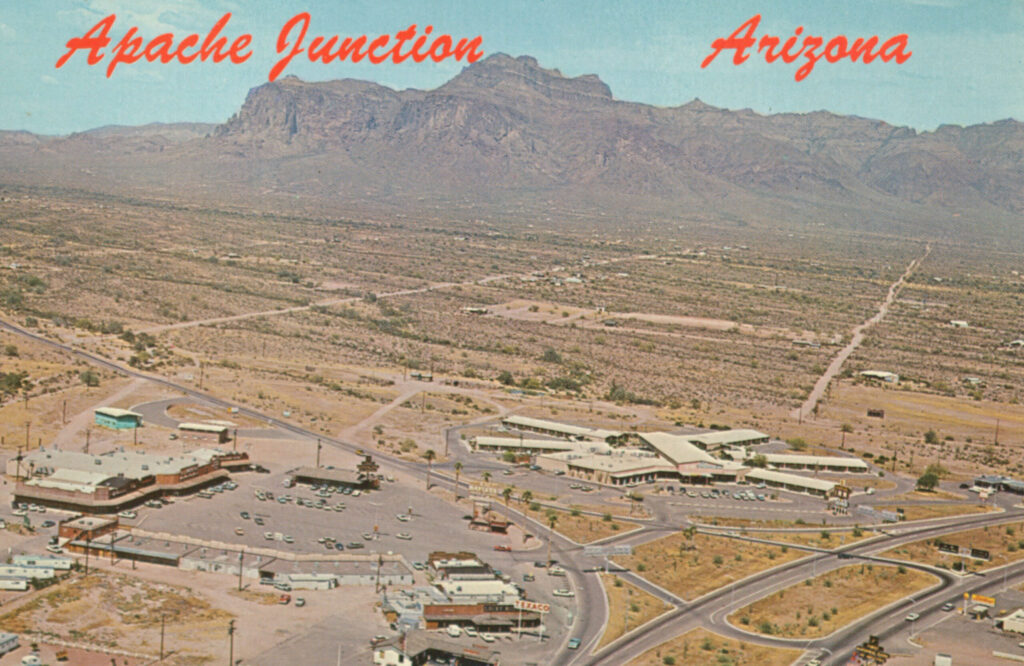
That civic role matters. The hotel was not simply one business among many. As the largest and most complete facility in the area, it absorbed many of the functions Apache Junction still lacked. In a real sense, the Superstition Ho was trying to become the town center before the town had fully formed.
Its entertainment connections added to the mythology. Film crews working at nearby Apacheland Studios stayed there. Richard Boone’s production staff used the hotel. Audie Murphy and other Western film figures were connected to productions in the area. Local stories also place stars such as Ronald Reagan, Jack Nicholson, John Wayne, and Elvis Presley in the hotel’s orbit, though some of those celebrity accounts are easier to document than others.
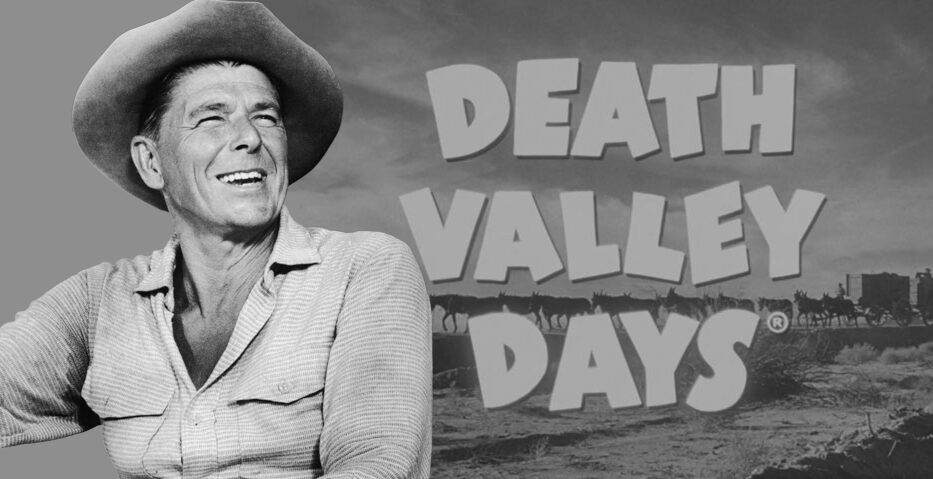
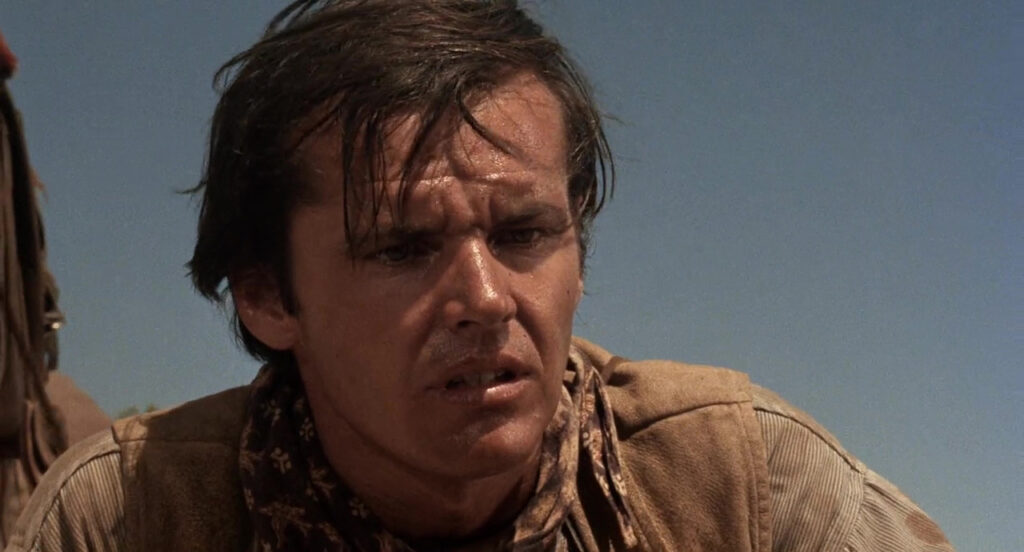
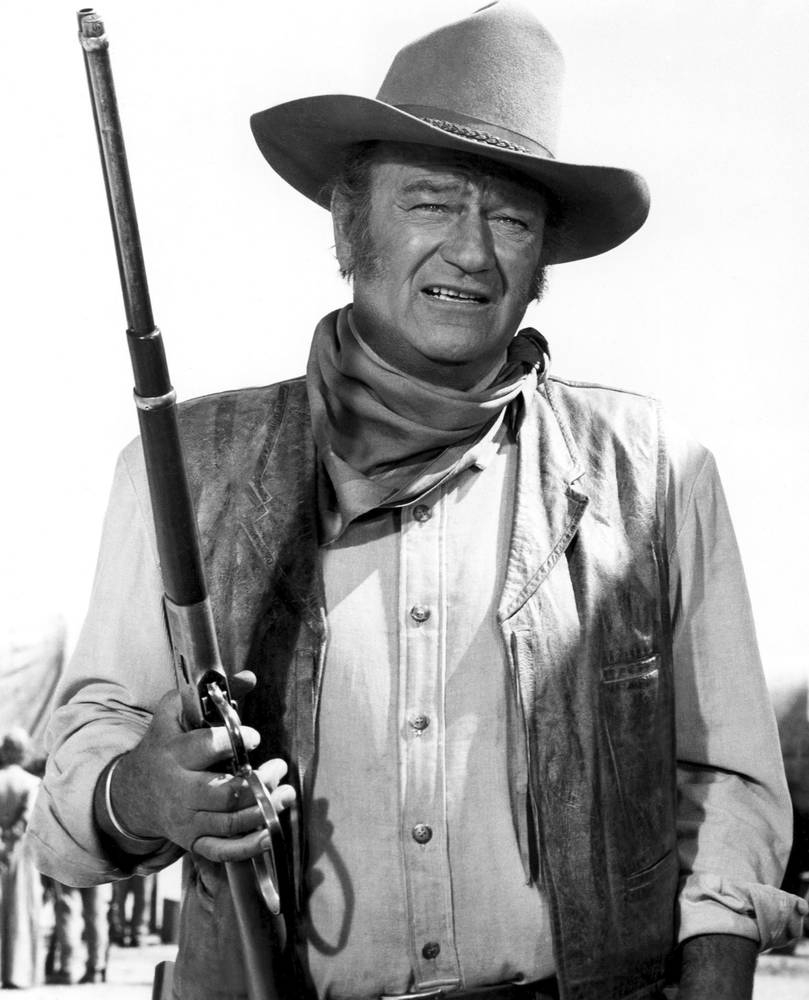
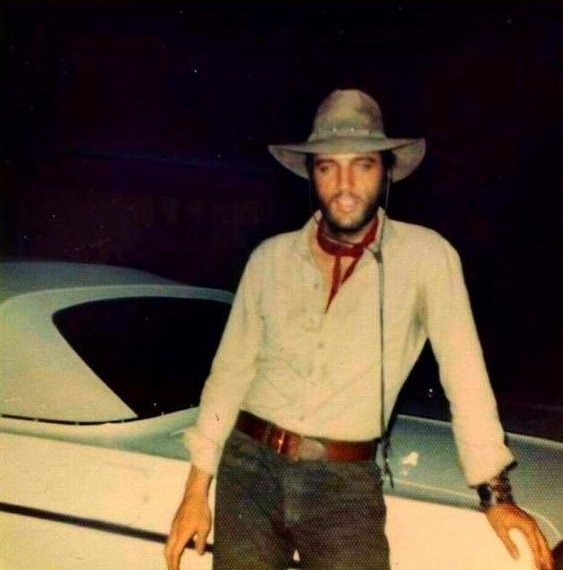
The broader point is clear enough: Apache Junction was trying to sell itself as a place where Western fantasy, desert tourism, professional sports, and celebrity culture could meet.
The dream starts to wobble
The problem was timing.
By the mid-1960s, the Western boom had begun to lose force. American popular culture was changing quickly. The Old West still had appeal, but it no longer defined the future the way it had in the 1950s. Space-age optimism, suburban expansion, television shifts, and changing travel patterns all pulled attention elsewhere.
The hotel’s own history reflected that instability. It changed hands, changed names, and struggled through shifting ownership. The Superstition Ho became Marshall’s Inn, then the Superstition Inn. What had opened as a polished resort vision became harder to sustain.
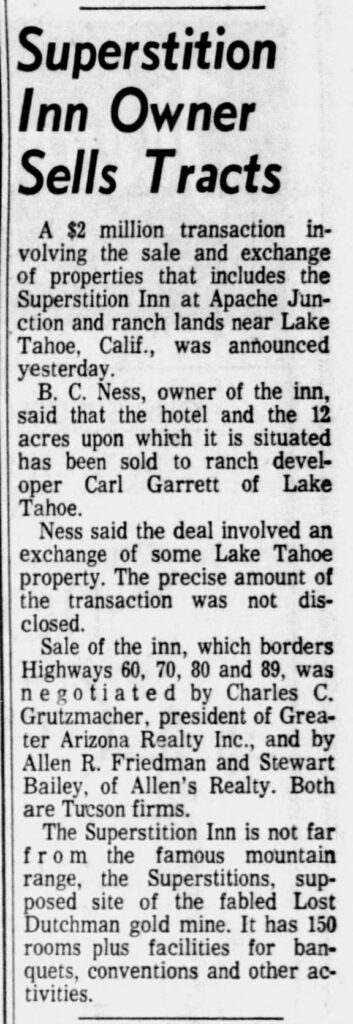
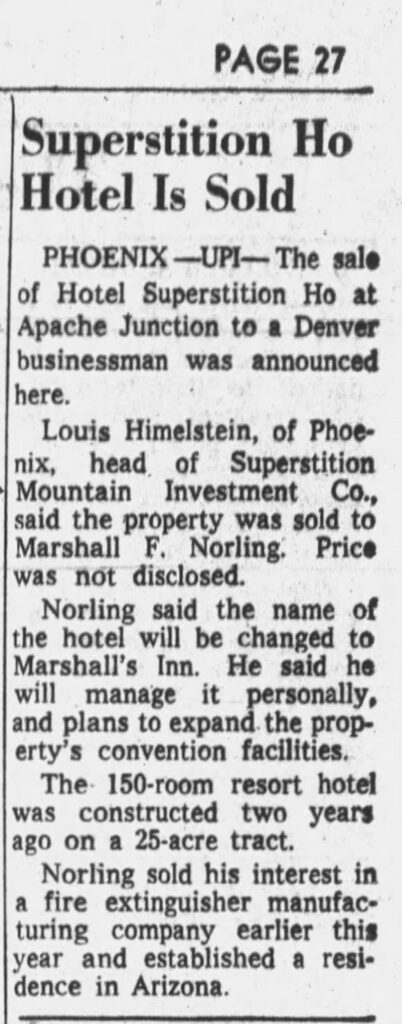
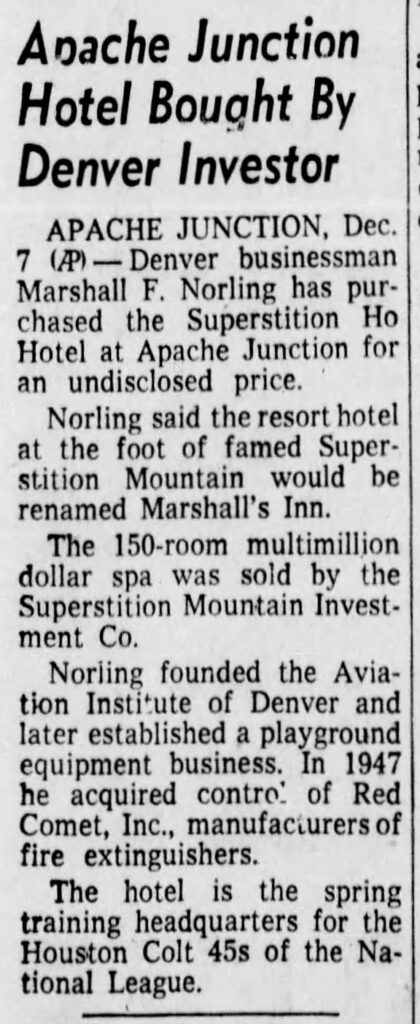
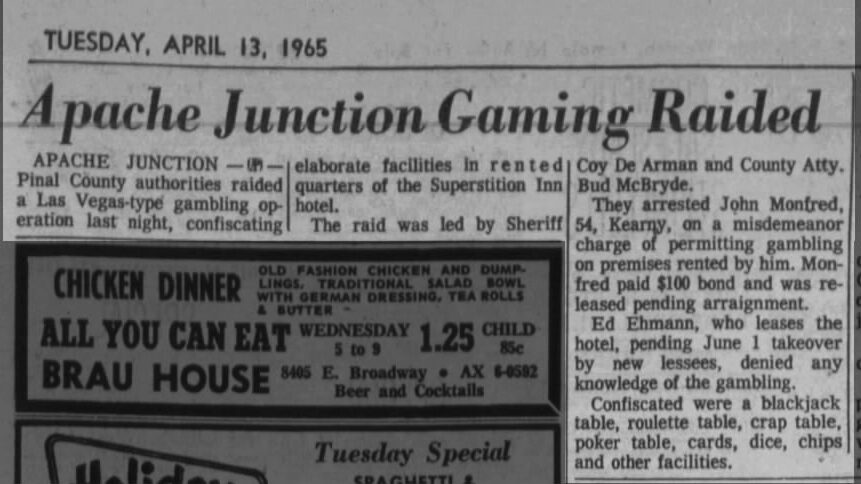
Then came scandal. In 1965, authorities raided a rented suite inside the hotel and reported finding an illegal Las Vegas-style gambling operation, complete with blackjack, roulette, craps, cards, dice, and chips.
The glamour had not vanished, but the edges were fraying.
Fire, reinvention, and disappearance
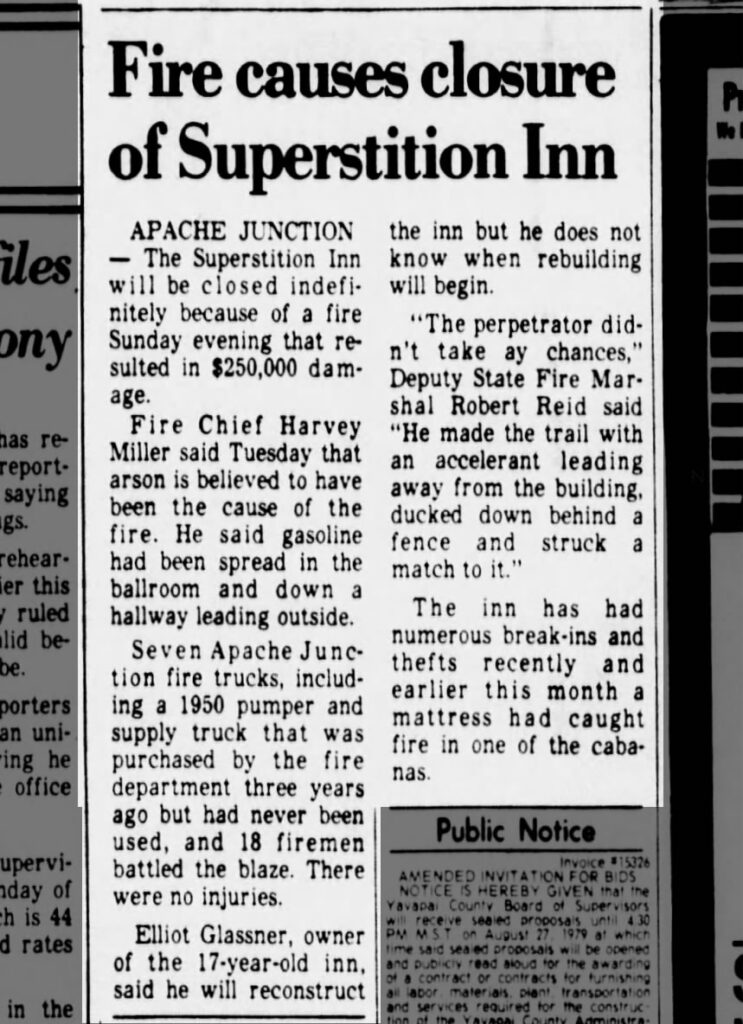
The most dramatic break came in 1978, when fire tore through the resort and caused an estimated quarter-million dollars in damage. Investigators ruled it arson after finding evidence that gasoline had been spread through parts of the building.
The property survived, but the resort era was effectively over.
In 1980, Art and Betsy Grandlich gave the site a strange second life as the Grand Old Cars Museum and Grand Hotel. The old resort complex became home to antique convertibles, roadside nostalgia, apartments, shops, and hotel rooms. It was still an attraction, just a different kind.
That chapter eventually faded too. The contents were auctioned off, and the buildings were demolished in the 2000s.
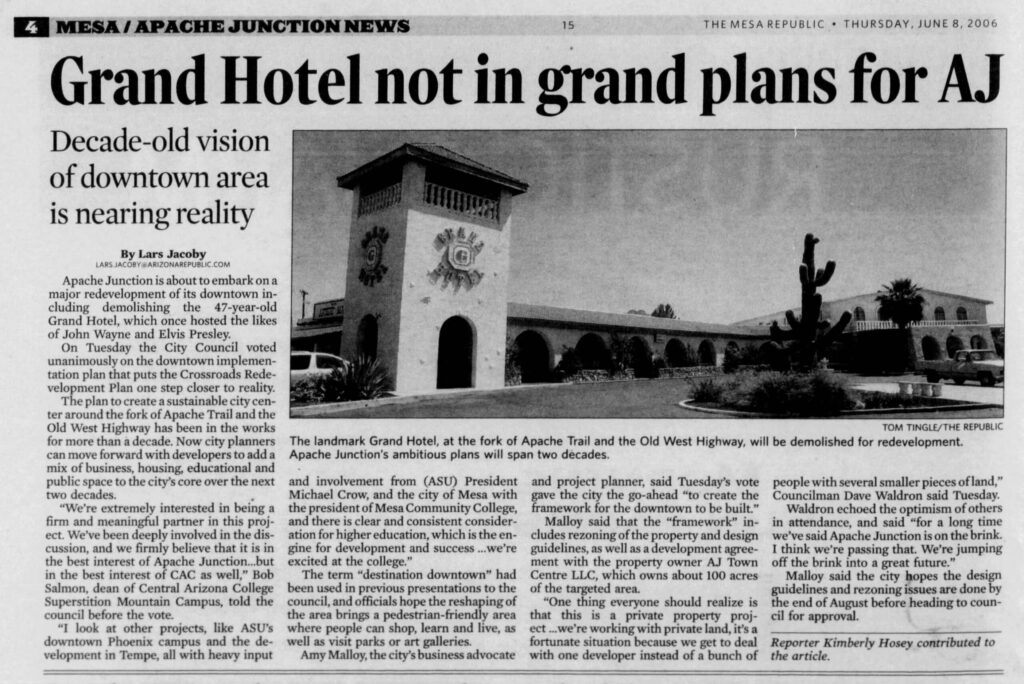
Today, the Superstition Ho Hotel survives mostly in aerial imagery, newspaper archives, photographs, and the faint physical traces left behind on the parcel itself. But those traces still matter. They reveal a moment when Apache Junction tried to invent itself around a mountain, a myth, and a bold midcentury bet that burned bright, then burned out.
Historic aerial imagery does not just answer questions. It teaches you how to ask better ones. It gives you a way to move backward through the landscape, one clue at a time, until an ordinary parcel becomes part of a much larger story.